
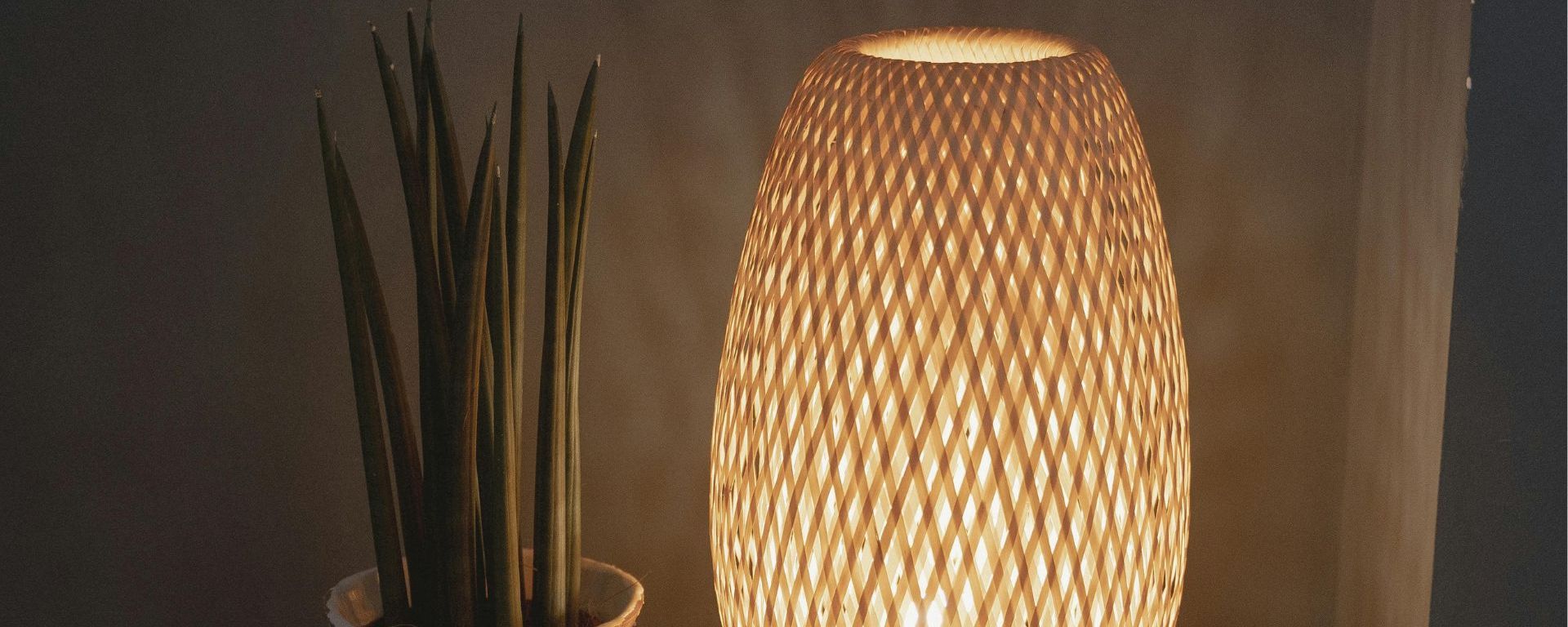
Our kindergartener spent the first weeks of homeschool at the very beginning of Genesis: the days of creation, then the sun, then the moon. Each lesson kept coming back to the same verse:
God made the two great lights, the greater light to govern the day, and the lesser light to govern the night; He made the stars also. (Genesis 1:16, NASB 1995)
Scripture quotations taken from the (NASB®) New American Standard Bible®, Copyright © 1995 by The Lockman Foundation. Used by permission. All rights reserved. www.Lockman.org
Somewhere between the sun unit and the moon unit, I noticed something about that verse. The lights were not made interchangeable. Each has a purpose and a time. The sun is for work and growth. The moon is for rest and quieter hours. The stars are for wonder and for finding your way.
Many of us light our homes the opposite way: one overhead fixture, one brightness, all day long. I’ll admit our setup didn’t start with a plan. My eyes have never liked builder-grade overhead lighting, so over the years we’ve replaced it gradually, researching each purchase and adding one lamp at a time. It wasn’t until these lessons that I realized we’d been lighting our home the way Genesis describes. So here are the home lighting ideas we’ve used to light our home by purpose instead.
This post contains affiliate and referral links. If you purchase through them, I may earn a small commission or rewards at no extra cost to you. As an Amazon Associate, I earn from qualifying purchases. Not every link is an affiliate link, and every product here is something we own and use, or a close match where ours is no longer sold.
The Greater Light: Light for Focused Work
Morning work and school need bright, focused light, the closest thing indoors to midday sun. My office has an overhead fan light, and I don’t use it at all. Instead, each corner of the room has its own light. A color-changing floor lamp offers adjustable color temperature and dimming for everyday work, plus a full rainbow spectrum and light shows that respond to music and sound in the room, which is more fun than functional. A matching pair of spiral floor lamps, each with three brightness settings, fills two more corners. Ours came from Costco and are no longer sold, but this similar spiral floor lamp is a close match. A small, modern sculptural table lamp from IKEA that we’ve had for years takes the fourth spot. Together, they cast light up and across the room, so it reaches the desk evenly instead of glaring from a single point overhead.
On the desk, a Vari desk lamp handles the close work. I start each workday there with my Full Focus Planner, and good task lighting noticeably lowers the friction of sitting down to begin.
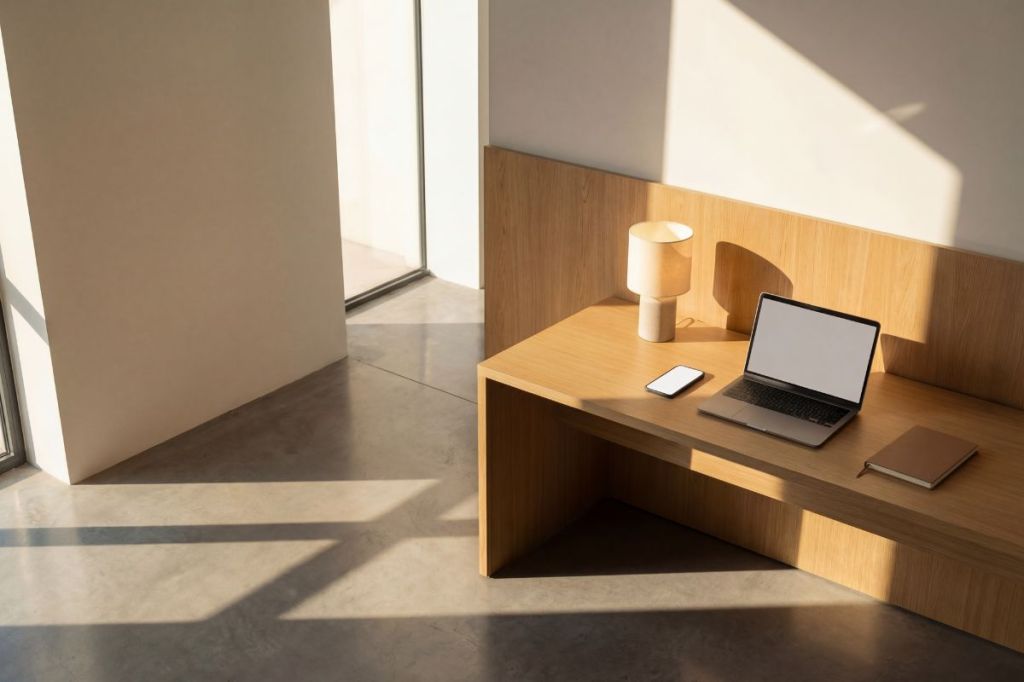
The same principle applies to the school table. A child tracing letters under dim, yellow light is working harder than necessary.
Practical note: Pair overall room light with a dedicated task lamp. Many people find neutral-to-cool light easier for focused work, so a lamp with adjustable color temperature lets you find what suits your eyes.
The Lesser Light: Light for Evening and Rest
The moon was the lesson that stayed with us most. It has no light of its own. Everything it gives, it reflects from the sun. To make the point, we gathered all three of our little ones, our kindergartener, our preschooler, and our toddler, into a dark room and stood together in front of a mirror. In the dark, the mirror showed nothing. Then we switched on the flashlight nearly all of us carry everywhere, the one on our phones, and the mirror filled with light that was never its own. There were audible “whoa”s and “wow”s, followed immediately by “Can I try it?” It was a lesson for all of them, and fun for all of us.
That is the moon’s work, and it is ours as well. Jesus called Himself the Light of the world (John 8:12), and He told His followers that they are the light of the world (Matthew 5:14). We don’t produce that light. We reflect it. (If you have little ones, try the mirror in a dark room. It takes less than two minutes, and they won’t forget it.)
The same lesson turned out to be good design advice. Evening light is best when it’s reflected, bounced softly off a ceiling or wall rather than aimed at the eyes. It tells a household that the workday is over.
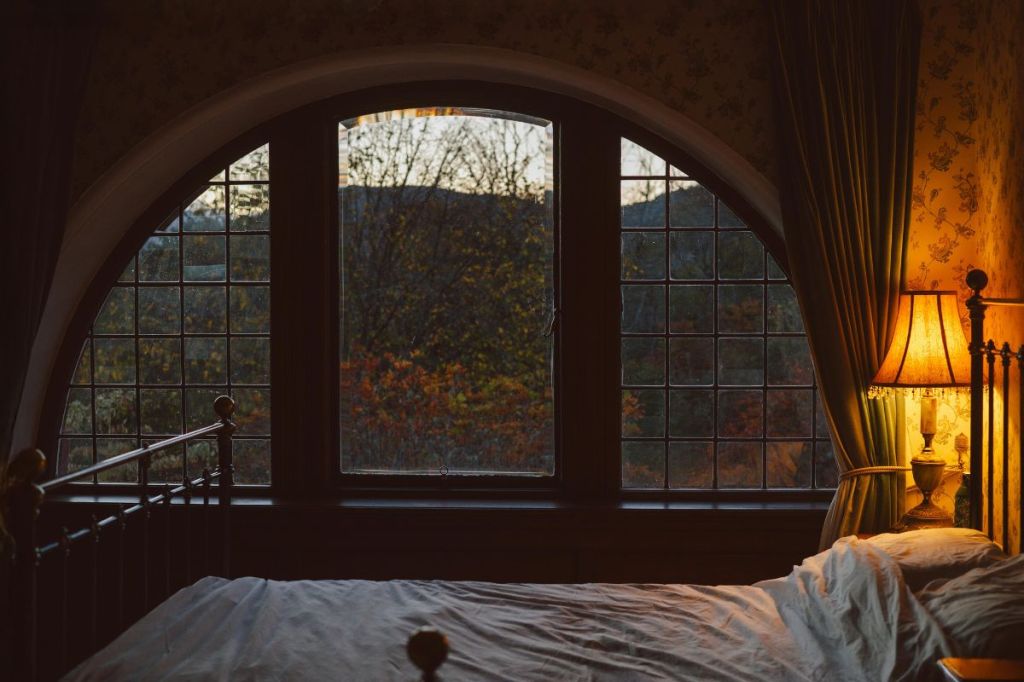
In our bedroom, the book tower with light has quietly become one of the most useful things we own. It holds our current reads, and its open top lets light bounce off the ceiling rather than shine into your eyes. Its adjustable color temperature and dimming let it change with the day: brighter and cooler in the morning, warm and low for reading before bed. It’s a small, practical picture of what Genesis describes: light that marks the hours rather than ignoring them.
On the nightstand, a Hatch Restore rounds out the room with soft light, white noise for sleep, and an alarm to start the morning. (Ours is an earlier generation; the link goes to the current model.)
For our little ones, its smaller sibling, the Hatch Baby, does the same work on a child’s scale. Ours, also an earlier generation, combines a night light, sound machine, and two-way audio monitor, so we can listen in during naps and talk with them during quiet play time. We’ve set up a few favorite presets, each pairing a light color and a sound with a schedule, so the room shifts on its own from bedtime to wake-up time. Our children can’t quite read a clock yet, though they’re getting close, but they already know what the light means. In our home, that small light keeps the night for sleeping, much as the moon was set to govern it.
Practical note: Many sleep experts recommend dimmer, warmer light in the hours before bed, because bright, blue-rich light late in the evening can make it harder to wind down. Lamps with adjustable color temperature and dimming let you choose what works for your household.
The Stars Also: Light for Wonder and Gathering
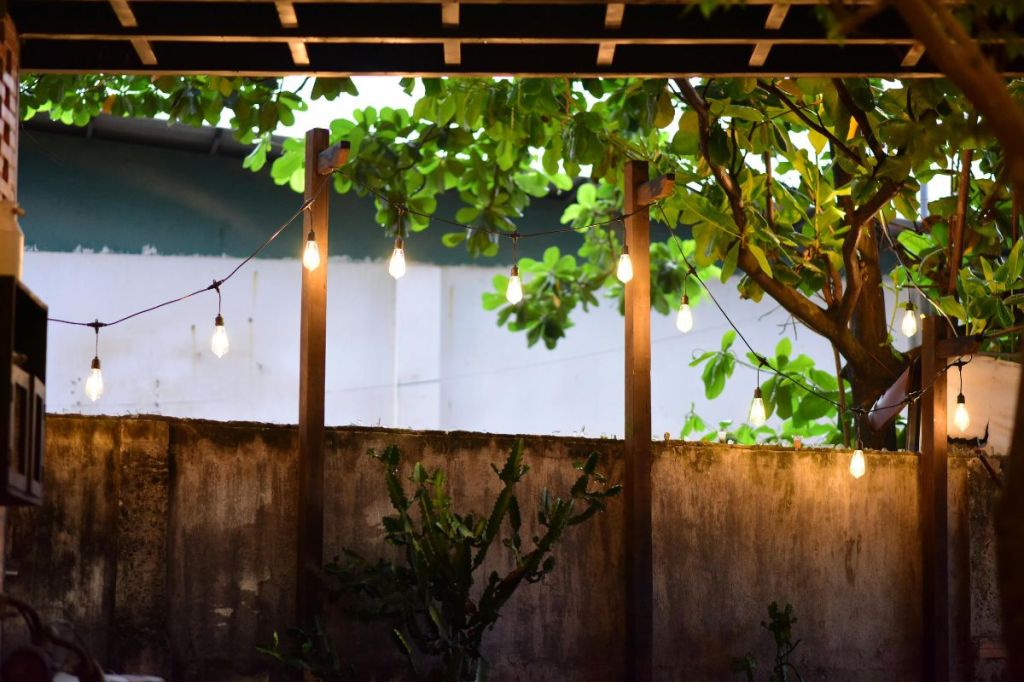
Genesis mentions the stars almost in passing, but anyone who has stood outside on a clear night with a child knows they aren’t an afterthought. String lights on our patio (from Amazon and Costco) turn an ordinary backyard into a place we actually want to sit after dinner, and a plug-in mosquito repeller that connects right to the string lights has made those warm evenings far more pleasant. Solar path lights guide small feet safely to the door and cost nothing to run (ours came from Costco; these are a close match).
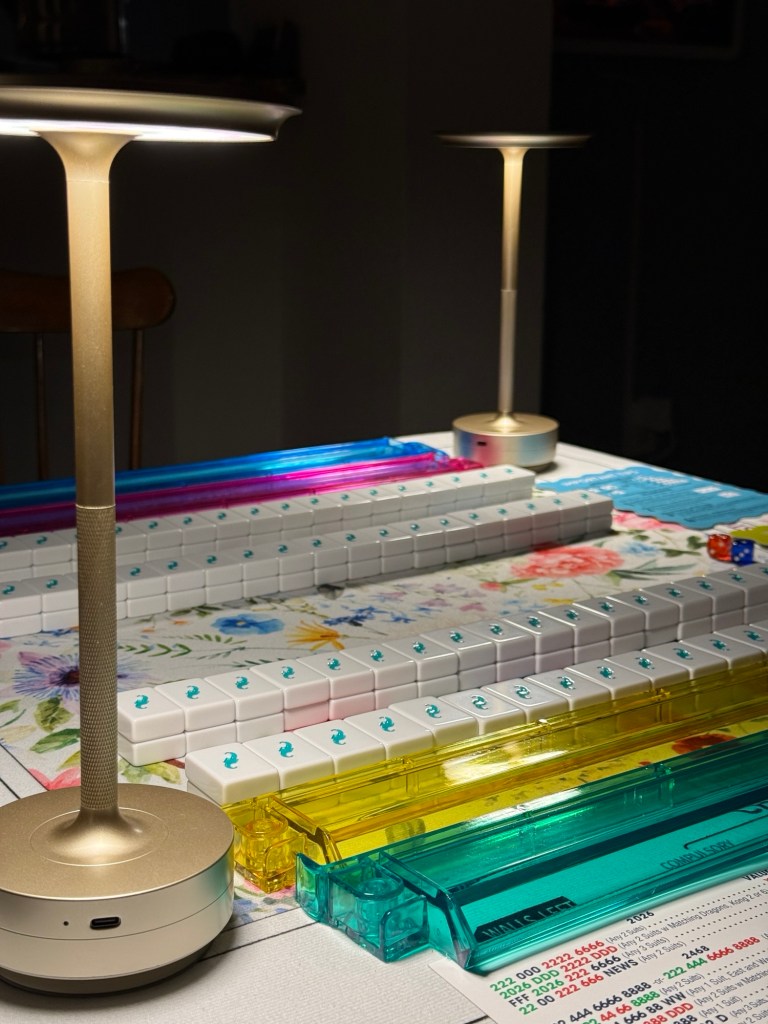
Indoors, a pair of small cordless lamps carries that same starry feel. Most evenings they sit on our mantel as soft, indirect light. They’re rechargeable, dimmable, and switch between warm, neutral, and cool, so they can light a quiet room or a game night. When friends come over, they move to the Mahjong table, and on mild evenings they go outside. Good lighting at a table is a form of hospitality. It tells guests to stay a while.
Light on the Earth: Light for the Small Places
Genesis 1:15 adds a detail that’s easy to overlook. Beyond governing day and night, the lights were made simply to give light on the earth, in the ordinary places where life happens. In a home, those places are the pantry, the garage closet, and the dark stretch under the kitchen cabinets.
We’ve added magnetic LED strip lights to several of those spots. They’re cordless and rechargeable, and they mount almost anywhere with a magnet, so there’s no wiring and no electrician. Motion activation turns them on when you open a door or reach into a cabinet. Separate day and night settings keep them bright during the day and gentle enough for a late-night glass of water. For under-cabinet work light, they can also stay on constantly. Adjustable color temperature lets them match the room around them.
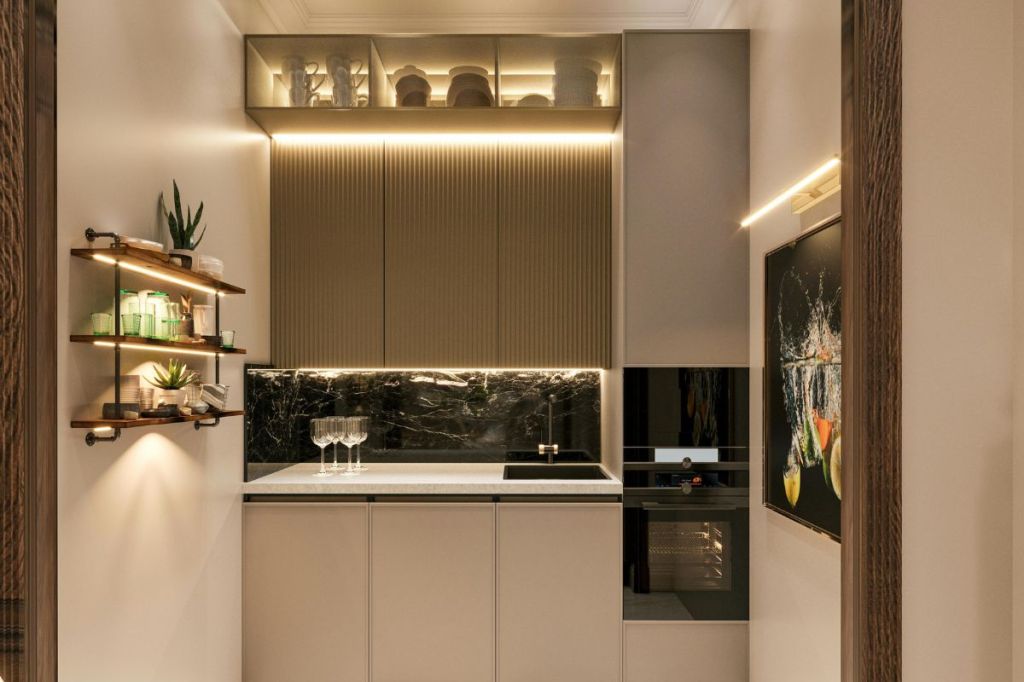
It’s a small upgrade, but it removes a hundred tiny frustrations: fumbling for a flashlight, guessing which can is black beans. Reducing friction in the small places is a large part of running a home well. (I wrote more about that in my home organization post.)
Practical note: For pantries and closets, motion-activated lights save battery and are easier for small children to use, since there’s no switch to reach.
Light as a Rhythm
In the creation account, the lights have a purpose. They were given to mark signs and seasons, days and years. They give time its shape. A home can do the same, with bright light for doing good work, softer light for letting the work go, and something a little starry for the people you love.
We’re teaching our children that God made the sun, the moon, and the stars, and that, like the moon, we were made to reflect a light that isn’t our own. I hope that, without a lecture, the way our home is lit also teaches them that there is a time to work and a time to rest, and that both are good.
We use My Father’s World for preschool and kindergarten. If you’re considering it for your family, I’m glad to share my referral link, which gives new customers $25 off a first order of $250 or more and earns us rewards points toward next year’s curriculum at no extra cost to you: My Father’s World.
Discover more from Michael Hansen
Subscribe to get the latest posts sent to your email.


This is excellent. Thanks for sending. ??
LOVE,
MOM
LikeLiked by 1 person