
This post contains affiliate links, including as an Amazon Associate and Full Focus Certified Pro. I earn from qualifying purchases.
Every family has a version of the same problem: stuff piles up, systems fall apart, and “getting organized” becomes a once-a-year event instead of a way of life. Here’s what’s actually worked for us — not a Pinterest-perfect house, just fewer piles and less searching for things. We’re still figuring a lot of this out as we go, and what works for us might need tweaking for your season of life or your family’s rhythm. That’s okay. This isn’t about doing it perfectly, it’s about doing it a little better than before.
Everything Has a Home
If an item doesn’t have a designated spot, it becomes clutter by default — it has nowhere to not be in the way. Our rule: everything gets a home, or it goes in the donation bin or the trash. No in-between, no “I’ll figure out where this goes later” pile.
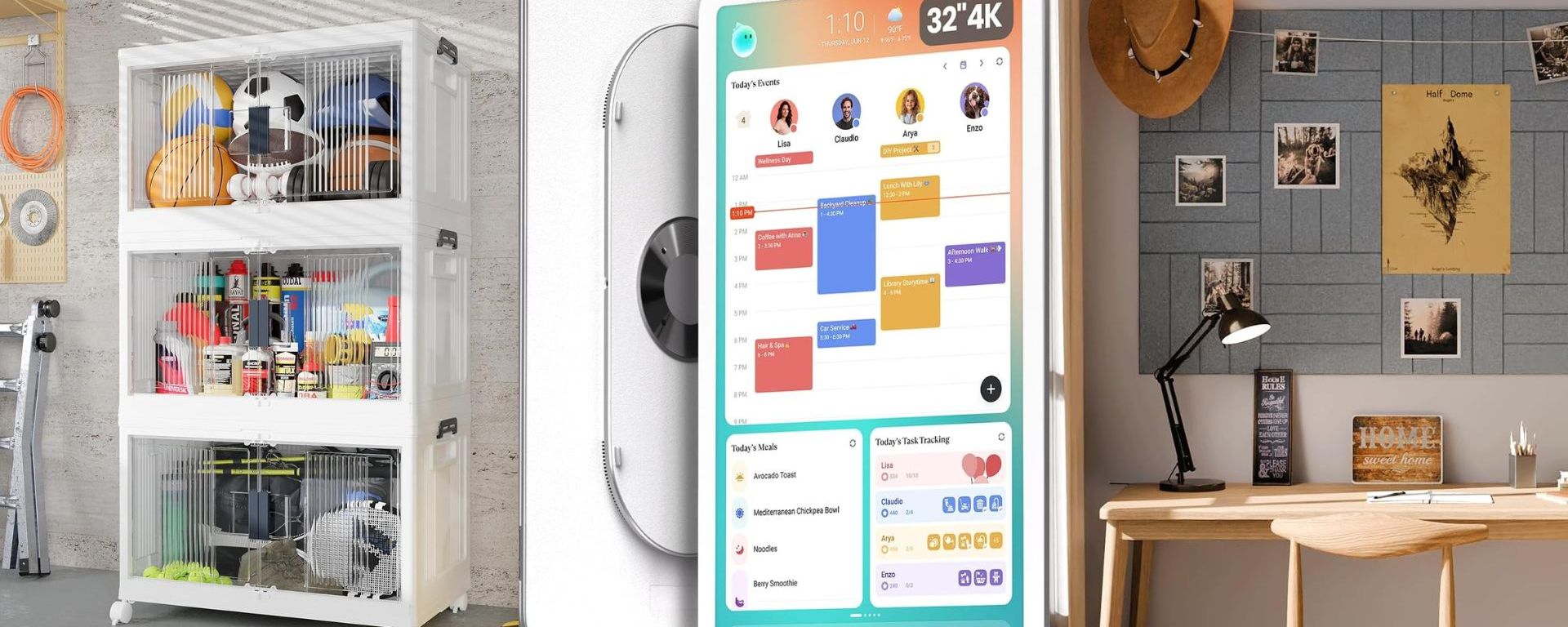
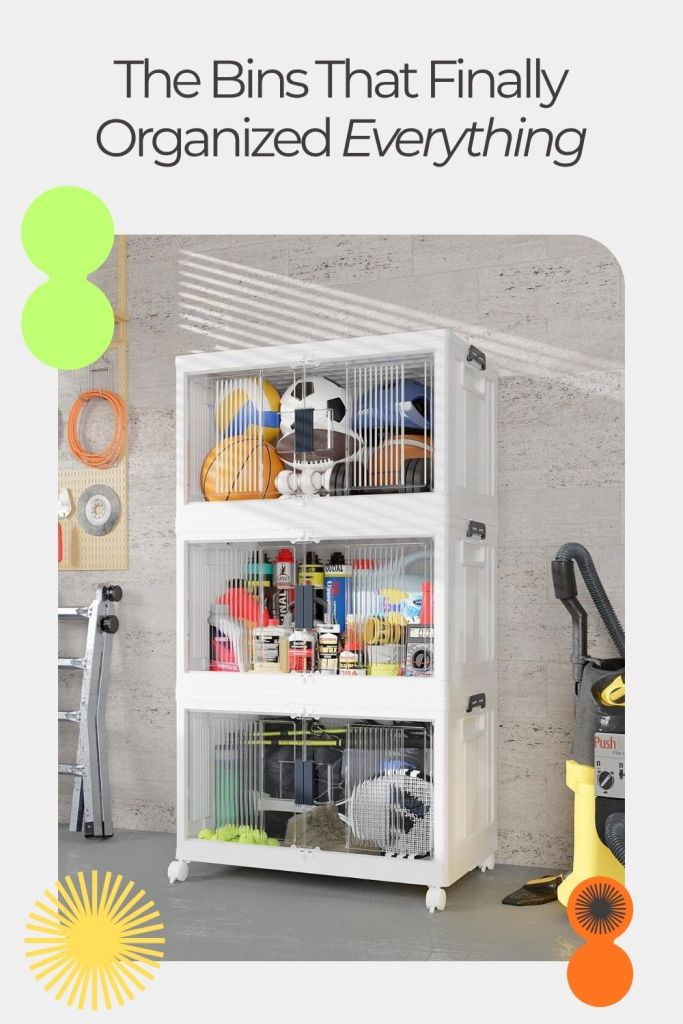
This is where the right storage actually matters. Our large stackable storage bins became the home for a huge chunk of stuff that used to float around without a spot — they’re big, they close, and once something has its bin, it stays there.
OHIO — Only Handle It Once (The One-Touch Rule)
I first came across this from @dobetterjonathan on Instagram. Some call it the “one-touch rule”: handle tasks immediately instead of postponing them. When an item or decision arises, complete it if it takes just a few minutes, file it, delegate it, or discard it — right then, not later.
The goal is to avoid halfway work and repeated effort. Every unfinished micro-task leaves behind what’s sometimes called “attention residue” — a small mental tab that stays open until the task is actually done. Multiply that by a dozen small unfinished things in a day, and you’ve got the mental clutter that makes an already noisy world feel even noisier.
A few ways we try to live this out (imperfectly, most days):
- Shoes come off at the door and go straight where they belong — not left in the entryway
- Dirty laundry goes straight to the hamper, never set down “for a second”
- Mail gets opened and sorted (or tossed) the moment it comes in, not stacked on the counter
- Dishes get hand washed or loaded into the dishwasher right after a meal, not left for later
- Kids finish one activity and put it away before starting the next
None of these are complicated. The whole principle is just: don’t touch it twice if you can help it. We don’t always pull it off — some days it takes longer to catch up than we’d like to admit. But the more we practice it, the more it becomes second nature instead of one more thing to remember.
Like Goes With Like
Sorting by type does two things at once — it makes stuff easier to find, and it forces you to actually see what you have (which usually means finding expired stuff to toss or things you haven’t touched in 6+ months to donate).
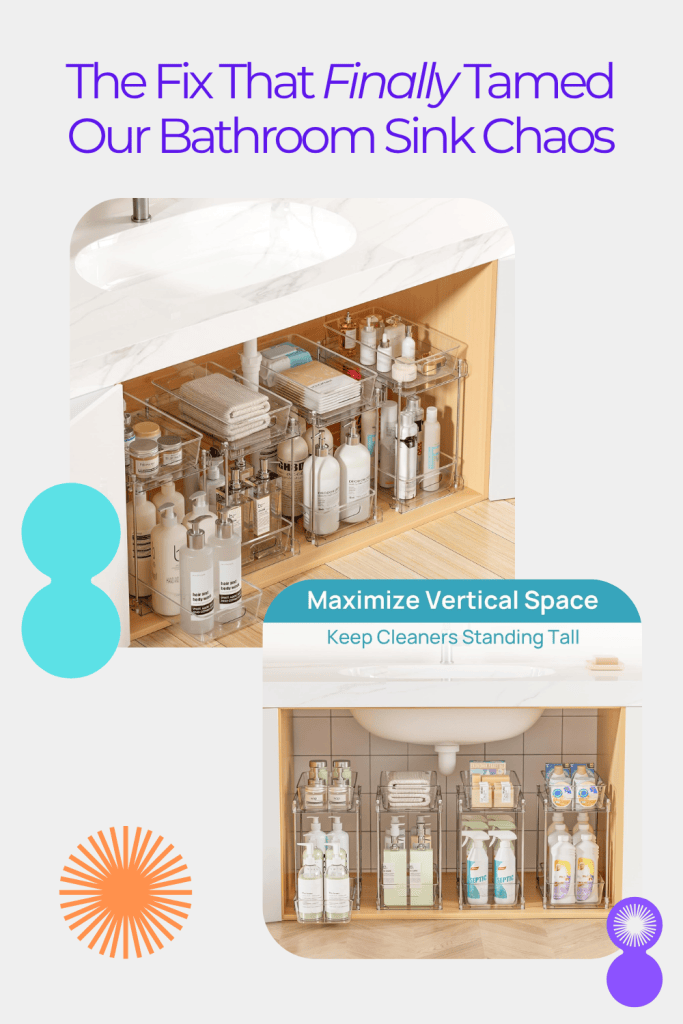
This is where good dividers make a real difference. This under-sink pull-out organizer turned a cabinet we dreaded opening into something we can actually sort and see at a glance.
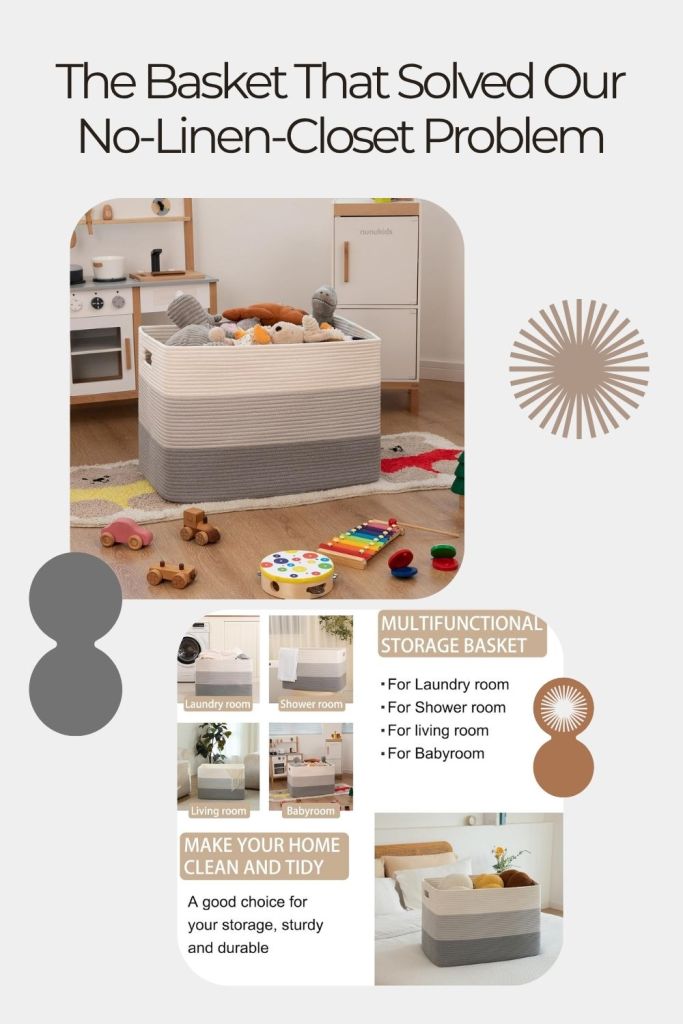
And our woven rope basket became the spot for every folded blanket and towel in one place — we don’t have an extra linen closet, so this one basket solved a problem we didn’t have a good answer for before.
The Habit That Ties It Together — The End-of-Day Tidy
Every evening, everyone in the house tackles an area — as quick as possible. Sometimes we set a 15-minute timer and turn it into a race against the clock with music playing. Whoever finishes first “wins.” It sounds small, but it’s the difference between clutter building up for a week versus resetting daily. Some of us fall into this naturally, and some of us need the timer and the music to make it feel like less of a chore — and that’s fine. We’re learning to extend grace to each other rather than expecting everyone to organize the same way or at the same pace. Whatever season you’re in with your own family, give yourselves permission to have realistic expectations instead of chasing some perfect system that doesn’t actually exist.
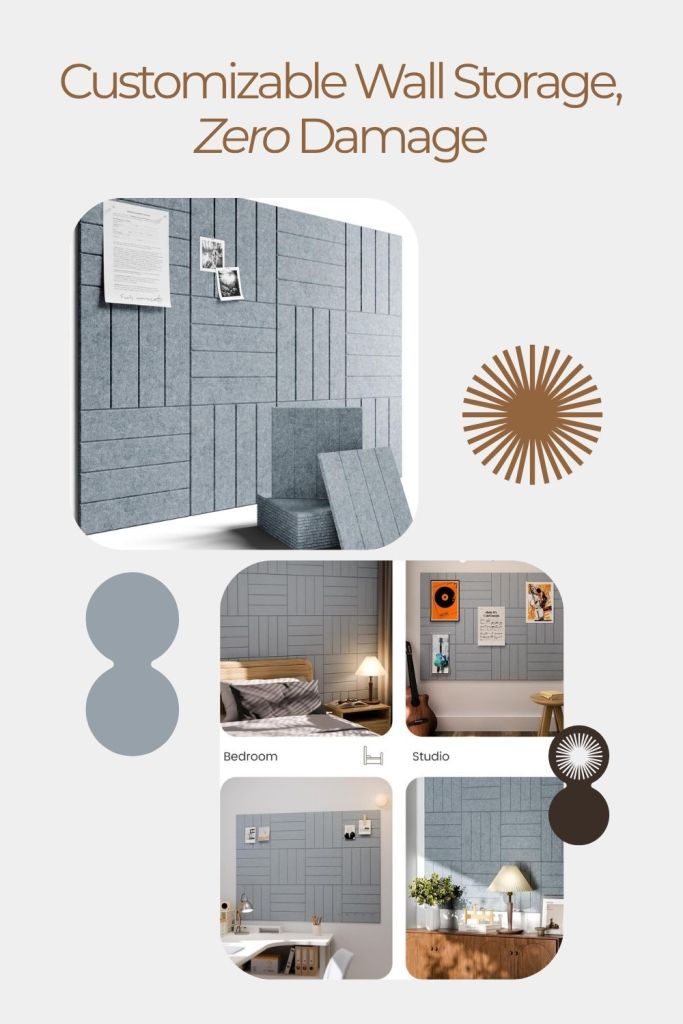
One more piece that’s helped: a large felt bulletin board mounted near our main living space — customizable squares in a variety of colors, no wall damage, just removable adhesive tabs. Right now it’s become the home base for our homeschool co-op calendar, class schedules, and whatever projects or assignments are in progress. It’s the one spot where we can see the whole week at a glance instead of hunting for a paper we know we saw somewhere.
Bonus — Organizing Isn’t Just Physical
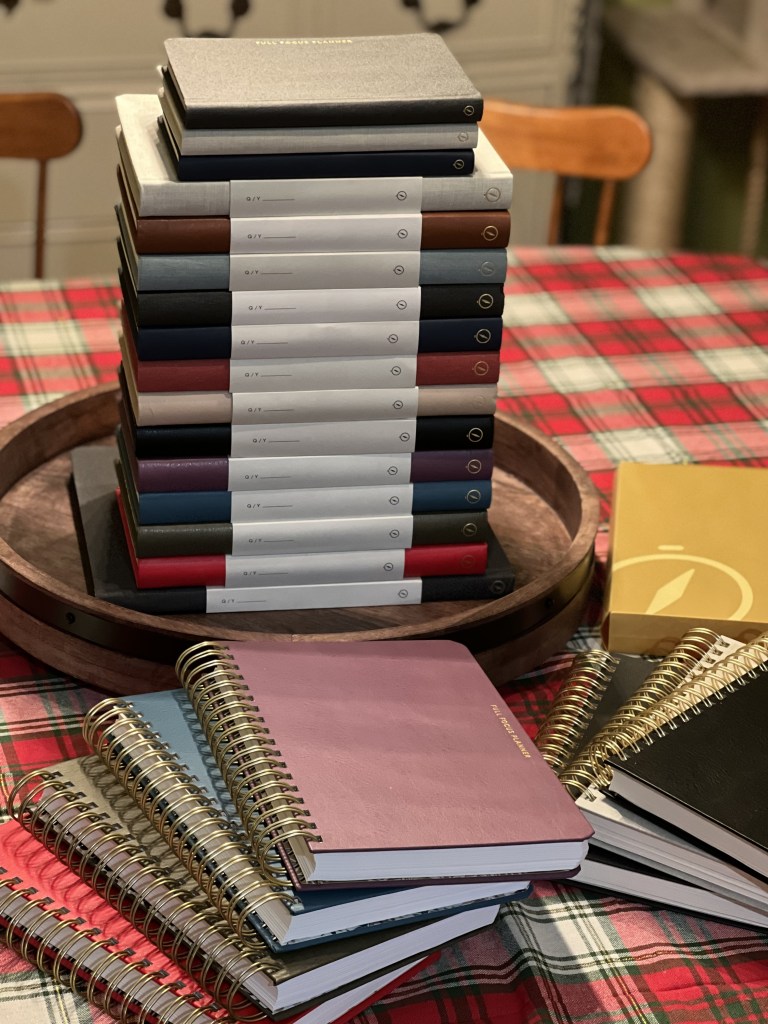
Everything we’ve covered so far is about stuff — but the same principles apply to information and even responsibility. Our schedule used to live in a few different places at once: a phone app, a mental list, a sticky note here and there, my Full Focus Planner. That’s its own kind of clutter, just less visible.
A 32-inch 4K touchscreen family hub became the one shared “home” for our schedule — synced across Google, Apple, and Outlook, so nobody has to manually update it in multiple places every time something changes. Everyone sees the same version of the week at a glance, on one wall-mounted screen.
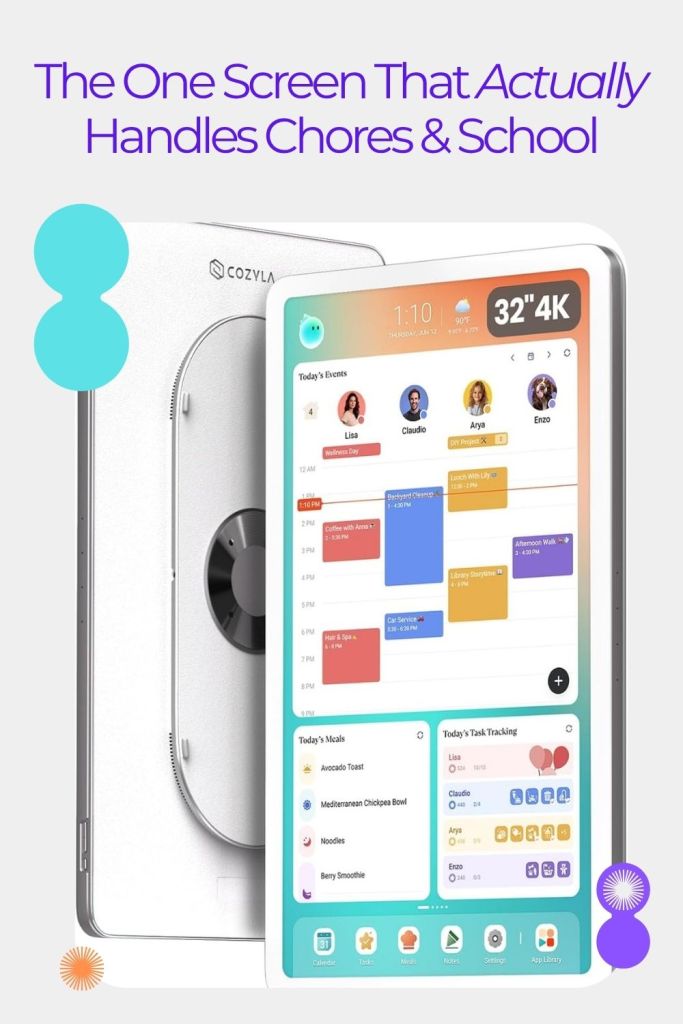
It’s also become the home for our kids’ chore chart and daily routines — one shared spot where they can see what’s expected of them and check things off, instead of us repeating the same reminders throughout the day. Same principle as the bins and the basket: give something a clear home, physical or digital, and it stops being clutter (or noise) and starts being a system.
None of this requires a total home overhaul, and none of it requires getting it right the first time. Pick one principle, try it for a week, and see what sticks for your family.
What’s one organizing tool or habit that’s made the biggest difference in your house? I’d love to hear what’s working for your family in the comments.
Discover more from Michael Hansen
Subscribe to get the latest posts sent to your email.


You found a sideline business that fits your ABC’s. Many will want the organization. Good
LikeLike
Great! Love all of these… and I love things to be organized and in their place. 😊
LOVE,
MOM
LikeLiked by 1 person